
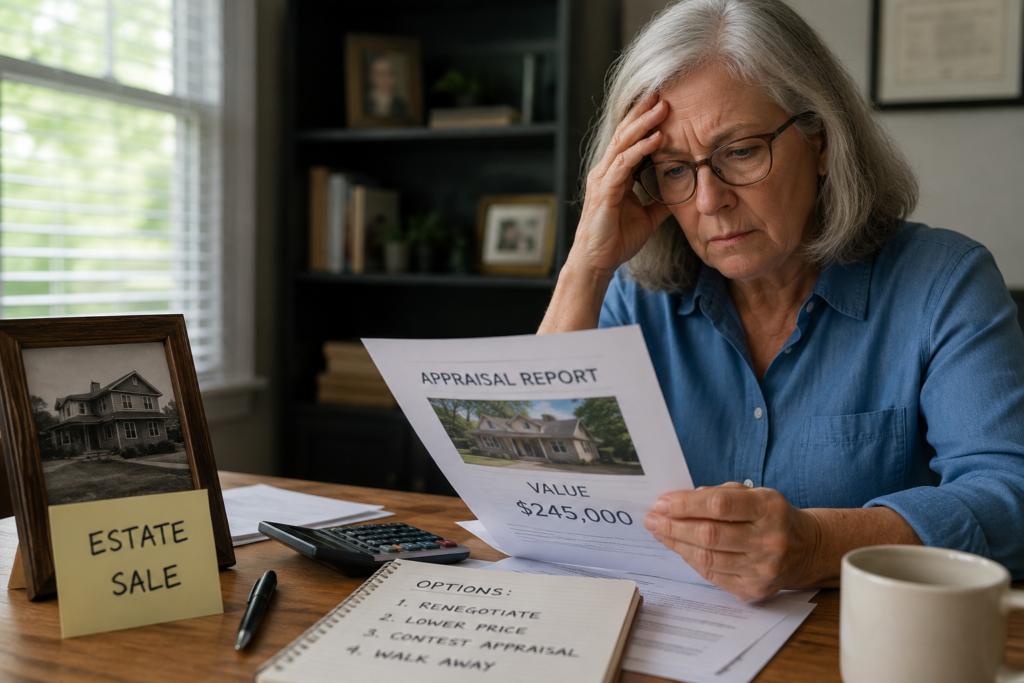
If a home appraisal comes in below the agreed sale price, the sale isn’t over. The buyer, seller, and lender simply have to close an “appraisal gap” before the loan can move forward. For downsizers letting go of a longtime family home, or executors and heirs selling an inherited property, this moment often lands during an already emotional and time-sensitive process. Here’s exactly what it means and what you can do about it.
Why This Hits Downsizers and Estate Sellers Differently
If you’re a general home seller, a low appraisal is a negotiation hiccup. If you’re downsizing out of a house you’ve lived in for 30 years, or you’re an heir trying to close out an estate, a low appraisal can also mean:
- Timeline pressure. Probate deadlines, a senior parent already moved into assisted living, or multiple heirs waiting to divide proceeds don’t pause for a renegotiation.
- Emotional weight. The number on the appraisal can feel like a verdict on a home full of memories — it isn’t. It’s a lender’s collateral check, not a judgment of the home’s worth to your family.
- Unique property issues. Estate and long-held homes are more likely to have outdated kitchens/baths, deferred maintenance, older HVAC or roofs, or additions and outbuildings built without permits decades ago — all of which give appraisers less to work with.
- Multiple decision-makers. When several heirs have to agree on how to respond to a low appraisal, decisions that would take a single seller five minutes can take a week of phone calls.
The good news: sellers in these situations still have the same options — and often more room to move than they think.
What Is a Low Appraisal, Exactly?
A home appraisal is an independent, licensed opinion of a property’s value, ordered by the buyer’s lender. The lender uses it to confirm the home is worth enough to secure the mortgage.
Example: You accept an offer of $300,000. The home appraises at $285,000. That $15,000 shortfall is the appraisal gap — and it has to be resolved before closing, because the lender will base the buyer’s loan on the lower of the two numbers, not the contract price.
Why Estate and Downsizing Homes Appraise Low More Often
Appraisers weigh recent comparable sales, location and acreage, square footage, age and condition, bed/bath count, renovations, construction type, and current market conditions. Homes coming out of estates or long-term ownership run into specific friction points here:
- Decades without updates. A kitchen or bathroom untouched since the 1980s pulls the value down relative to recently renovated comps nearby.
- Deferred maintenance. Aging owners or absentee heirs often couldn’t keep up with roof, HVAC, or foundation work — appraisers note this as condition risk.
- Clutter and personal belongings. A home still full of a lifetime of possessions can be harder for an appraiser to fully assess room-by-room, which sometimes leads to conservative estimates.
- Unpermitted additions. That sunroom, garage conversion, or in-law suite added in 1995 may not appear in county records, so the appraiser can’t credit the square footage.
- Rural, acreage, or unusual properties. Central Alabama estate homes with land, outbuildings, or historic construction often lack close comparable sales, which is one of the most common reasons an appraisal comes in soft.
- Stale comparables. The appraisal may lean on closed sales from several months ago, while your buyer is offering today’s market price.
None of this means the home is worth less than your buyer offered — it often means the appraisal simply didn’t capture the full picture.
What Are Your Options After a Low Appraisal?
1. Reduce the Purchase Price
The seller agrees to lower the price to match the appraised value (in the example above, from $300,000 to $285,000), letting the buyer’s financing proceed without extra cash. You are not required to do this automatically — the right call depends on your net proceeds, estate expenses, other offers, and contract terms.
2. Ask the Buyer to Cover the Gap
Some buyers include an appraisal-gap clause in their offer stating they’ll bring extra cash to closing up to a set amount. If so, this is often the fastest path to closing without renegotiating anything else.
3. Split the Difference
Buyer and seller each absorb part of the gap — for example, a $7,500 price reduction paired with the buyer bringing $7,500 in additional cash. This is frequently the fastest resolution when both sides still want the deal to close, which matters most when you’re on a probate or estate-settlement timeline.
4. Renegotiate Other Terms Instead of Price
Keep the sale price intact but adjust closing-cost credits, repair allowances, a home warranty, or other concessions to offset the gap. This can protect your net proceeds — important when proceeds are being divided among multiple heirs.
5. Request a Reconsideration of Value (ROV)
If the appraisal contains factual errors — wrong square footage, missed bedrooms or finished space, unrecognized permitted additions, incorrect acreage, or overlooked comparable sales — the buyer’s lender can request a formal reconsideration. This request must go through the buyer and their lender, and it needs to be backed by specific facts and documentation, not just an argument that the home is worth more. This is especially relevant for estate homes, where county records may not reflect improvements the family knows about.
6. Cancel and Return to the Market
If the contract has an appraisal or financing contingency and the gap can’t be resolved, the buyer may be able to walk away. Before doing this, weigh whether the low number was a one-off issue or something another appraiser would likely repeat. Consider canceling when you have strong backup interest, the buyer can’t contribute more, you can’t accept a lower net, or the appraisal seems out of step with real buyer demand. Just know a new buyer doesn’t guarantee a higher appraisal next time.
Do You Have to Accept the Appraised Value?
No — an appraisal is an opinion of value for the lender, not a rewrite of your contract. But if your purchase agreement includes an appraisal or financing contingency, the buyer may have specific rights when the home doesn’t appraise at the agreed price. Review your actual contract language and deadlines — especially important in an estate sale, where the personal representative has a fiduciary duty to the estate — before agreeing to anything verbally.
How to Prepare an Estate or Downsizing Home for Appraisal
A strong outcome starts before the appraiser ever walks in. A good agent will help assemble an appraisal package that includes:
- Relevant comparable sales
- A list of updates, improvements, and their approximate dates/costs
- Survey or acreage documentation
- Permit records where they exist
- Details on outbuildings, workshops, garages, or additional living space
- Notes on any competing offers
- Features an appraiser might miss on a short walkthrough
For estate and downsizing sales specifically, it also helps to:
- Clear or organize accumulated belongings so the appraiser can accurately assess every room
- Gather whatever paperwork exists on past renovations, even informal records or old receipts
- Flag any known unpermitted work up front so it can be addressed proactively rather than discovered as a surprise
Alabama REALTORS® recommends addressing condition, curb appeal, and key property details before the appraisal appointment whenever possible.
FAQ: Low Appraisals for Downsizers and Estate Sellers
What happens if my inherited house appraises for less than the offer?
The sale doesn’t automatically fall through. You and the buyer have several options — reducing the price, splitting the gap, adjusting other contract terms, requesting a reconsideration of value, or, if needed, returning the home to the market.
Can multiple heirs still sell if the appraisal comes in low?
Yes. The personal representative or executor typically has authority to negotiate a resolution on behalf of the estate, but major decisions — like accepting a lower price — often benefit from quick agreement among heirs to avoid delays.
Does clutter or an outdated interior actually lower an appraisal?
It can. Appraisers assess condition and finished space directly, so heavy clutter, deferred maintenance, or decades-old finishes compared to updated nearby homes can pull the number down, even if the home’s true market appeal is higher.
Should I make repairs before an estate home is appraised?
Not always necessary, but addressing visible deferred maintenance and gathering any documentation of past updates or permits can help the appraiser reach a more accurate number.
Who can request a reconsideration of value on an estate sale?
The request must go through the buyer and their lender, not the seller directly — but sellers and their agents can supply the comparable sales, permit records, or corrected facts that support the request.
A low appraisal is a negotiation point, not the end of the sale — and that’s especially true for downsizers and estates, where the number rarely tells the whole story of what the home is worth.
I help downsizing homeowners and families managing an estate sale throughout Centreville, Bibb County, Tuscaloosa County, Shelby County, Jefferson County, and the surrounding Central Alabama area — from preparing the home and pricing it right, through appraisal, negotiation, and closing. If you’re facing a low appraisal on a family or estate home right now, I can walk through your specific numbers and options with you.