
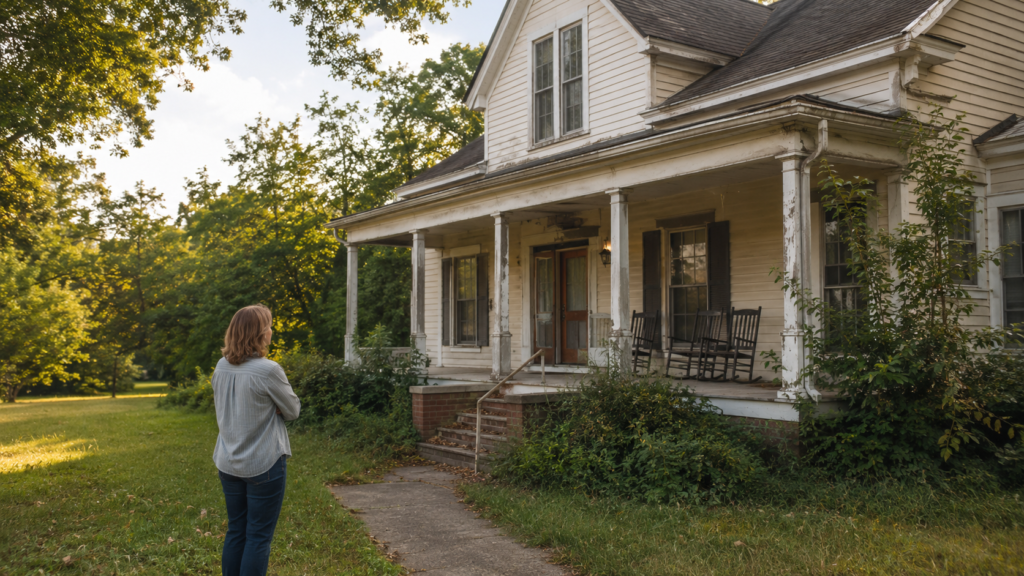
If you’ve inherited a house in Alabama after the loss of a parent, you’re probably dealing with more than just real estate.
You’re dealing with memories.
You’re dealing with family decisions.
And you’re trying to figure out whether keeping the house is honoring your parent or quietly creating a much bigger problem down the road.
In many cases, the most expensive decision isn’t selling the house.
It’s waiting too long.
As a Realtor in Alabama, I’ve worked with families facing this exact situation. I’ve also experienced it personally. I know how difficult it can be to imagine letting go of a home filled with memories.
But I also know what happens when an inherited house sits vacant for years.
Why Empty Inherited Homes Lose Value Faster Than Most People Realize
A house needs regular attention.
When no one is living there:
- Small roof leaks go unnoticed.
- Moisture builds up.
- HVAC systems sit unused.
- Pipes develop issues.
- Insects and rodents find their way inside.
- Landscaping becomes overgrown.
- Insurance risks increase.
The damage often happens slowly at first.
Then all at once.
What could have been a small repair turns into a major renovation.
Every month the house sits empty, part of your inheritance may be disappearing.
The Emotional Side of Selling a Parent’s Home
Many families aren’t holding onto the house because it makes financial sense.
They’re holding onto it because they’re not ready.
That’s understandable.
A childhood home is more than a structure. It’s birthdays, holidays, family dinners, and memories tied to every room.
One of the hardest parts is knowing someone else may eventually repaint the walls, remodel the kitchen, or change things your parent spent years creating.
I’ve felt that myself.
But keeping a house indefinitely doesn’t preserve those memories.
Sometimes it simply delays a decision while the home continues to deteriorate.
A Personal Story About Waiting Too Long
When my grandmother passed away, her six-acre property was divided among her children.
One sibling inherited the house and planned to keep it “just in case.”
Years passed.
No one moved in.
No one maintained it.
The roof eventually failed. Water entered the home. The contents deteriorated. The structure became unsafe.
Eventually the house was demolished.
Before it was torn down, I slipped inside and rescued a cast-iron trivet that had belonged to my grandmother.
Today it sits in my kitchen.
It’s one of the few physical reminders left of that home.
I wish someone had preserved more before the house was lost.
That’s why I encourage families to make intentional decisions sooner rather than later.
What Happens When You Sell an Inherited House in Alabama?
Selling an inherited property doesn’t mean you’re abandoning your family’s legacy.
In many cases, it means preserving its value.
When a home is sold:
- Family members can divide proceeds fairly.
- Ongoing maintenance expenses stop.
- Property taxes and insurance costs end.
- The home gets a new life with another family.
- You can preserve memories through photographs, keepsakes, and family heirlooms.
The goal isn’t to erase the past.
The goal is to protect what your parent worked hard to leave behind.
Common Mistakes Families Make With Inherited Property
Waiting for the “Right Time”
The right time often becomes several years later.
Meanwhile the property continues aging.
Leaving the House Vacant
Vacant homes deteriorate much faster than occupied homes.
Not Removing Important Family Keepsakes
Many families focus on the house itself and forget to preserve the personal items that matter most.
Assuming the Property Will Hold Its Value Forever
Real estate can appreciate over time.
A neglected house often does not.
Condition matters.
How to Know If It’s Time to Sell
You may want to consider selling if:
- No family member plans to live there.
- Maintenance is becoming a burden.
- Repairs are piling up.
- Siblings agree the property should be sold.
- The house has been sitting vacant for months.
- You want to preserve as much equity as possible.
Every family’s situation is different.
But waiting rarely makes the decision easier.
Frequently Asked Questions About Inherited Houses in Alabama
Do I have to pay taxes when I sell an inherited house in Alabama?
Tax situations vary based on your circumstances. It’s best to consult a qualified tax professional regarding capital gains, stepped-up basis rules, and estate-related tax questions.
Can multiple heirs sell an inherited property?
Yes. However, all owners generally need to agree on the sale unless a court orders otherwise.
How long can an inherited house sit vacant?
There’s no legal limit in most situations, but vacant properties often experience increased maintenance issues, insurance concerns, and value loss over time.
Should I renovate an inherited house before selling?
Not always. Sometimes minor improvements make sense. In other situations, selling as-is may be the better financial decision.
What is an inherited home worth?
The value depends on location, condition, market demand, and comparable sales in the area.
Final Thoughts
If you’ve inherited your father’s house and you’re struggling with what to do next, you’re not alone.
The decision isn’t really about the house.
It’s about preserving memories while protecting value.
At some point, every family must decide whether they’re keeping a home because it serves a purpose today or because they’re afraid to let it go.
If you’d like help understanding what the property might sell for in today’s Alabama market, I’m happy to provide guidance and explain your options.
Julie [Last Name] is a Realtor in Alabama helping families navigate inherited property sales, estate-related real estate decisions, and the process of selling a loved one’s home with care and respect.